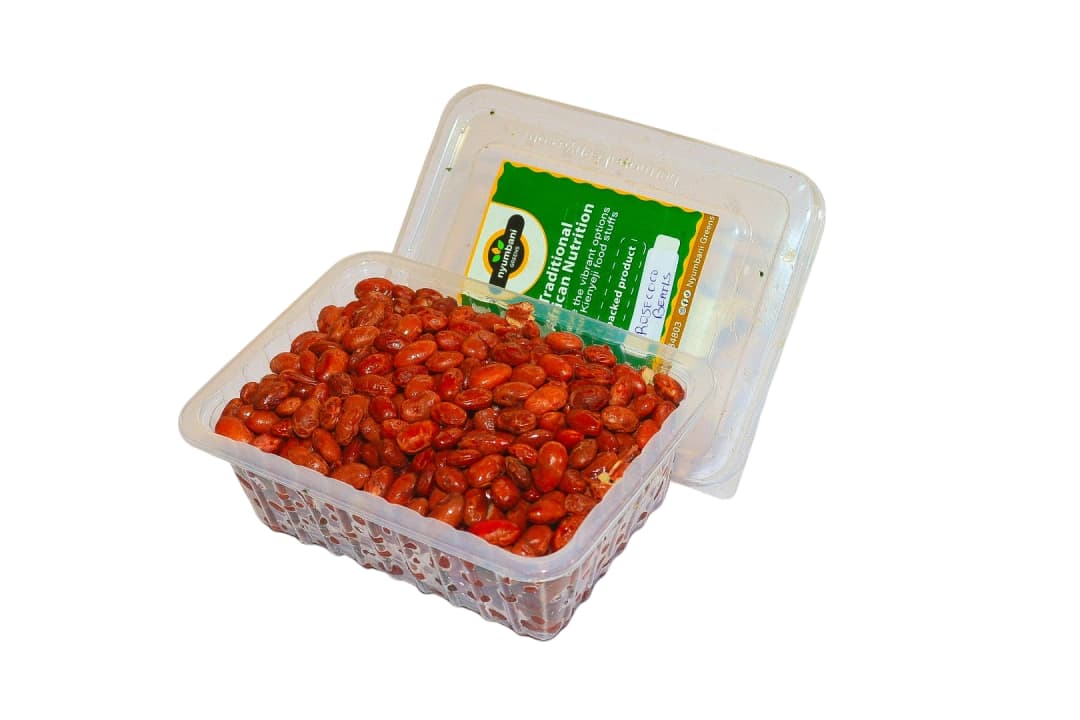
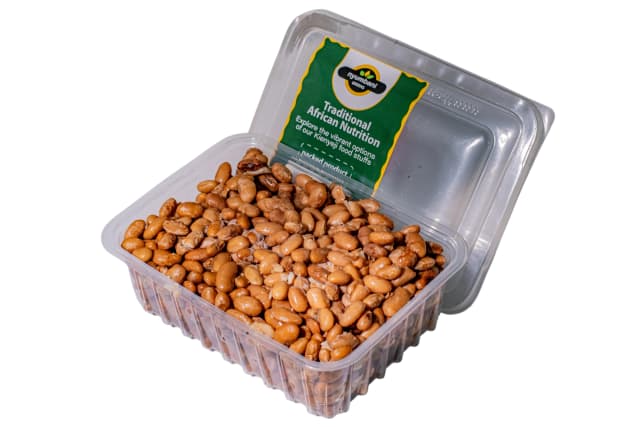
Rosecoco beans get their name from their appearance: a cream colored seed coat splashed with reddish-maroon speckles, similar in look to the beans some cuisines call borlotti. In Kenya, they are a kitchen staple, showing up in githeri, plain stews, pilau side dishes, and bean salads from Nyeri to Nairobi. Most home cooks know the drawback though, a full pot of dried rosecoco needs an overnight soak and then close to two hours on the stove before it softens properly.
Our precooked rosecoco beans skip that entire process. They arrive fully cooked, so the texture is already soft and creamy and the flavor has already developed its natural sweetness. All you need to do is warm them through with your onions, tomatoes, and spices, or toss them cold into a salad. For anyone cooking on a tight schedule after work in Kilimani or Westlands, or a household in Karen or Lavington that wants a quick weeknight githeri, this cuts a two-hour job down to fifteen minutes.
Nutritionally, rosecoco beans are a solid plant-based protein source, and they carry a good amount of dietary fiber alongside iron and potassium. That combination makes them a useful addition for households managing energy levels, digestion, or general heart health, and a practical protein swap on meat-free days.
In the kitchen, they hold their shape well after cooking, which makes them forgiving in a few different dishes. Add them to a beef or vegetable stew in the last few minutes just to warm through. Mix them into githeri with maize, or fold them into a rice pilau. For something lighter, toss them cold with chopped onion, tomato, coriander and a squeeze of lemon for a quick bean salad.
Once opened, keep any unused portion in a sealed container in the fridge and use within a couple of days, or freeze in a portioned bag for longer storage.
FREQUENTLY ASKED QUESTIONS
Are rosecoco beans the same as Wairimu beans?
No. They are different Kenyan bean varieties. Rosecoco has a cream and maroon speckled coat, while Wairimu is a separate variety often grown in similar regions. People sometimes use the names loosely at the market, but they are bred and classified separately.
Do I need to soak or boil these beans before eating them?
No. These rosecoco beans are already fully cooked. You only need to warm them through in your dish, or use them cold in a salad.
How long do I need to heat them before serving?
A few minutes in a pan or pot is usually enough, just long enough to warm through and pick up the flavor of whatever you're cooking with them.
What dishes work best with precooked rosecoco beans?
Githeri, stews, rice pilau, and bean salads are the most common uses in Kenyan kitchens, though they work in any recipe that calls for cooked kidney-style beans.
How should I store leftovers?
Refrigerate any unused portion in a sealed container and use within two to three days, or freeze for longer storage.